


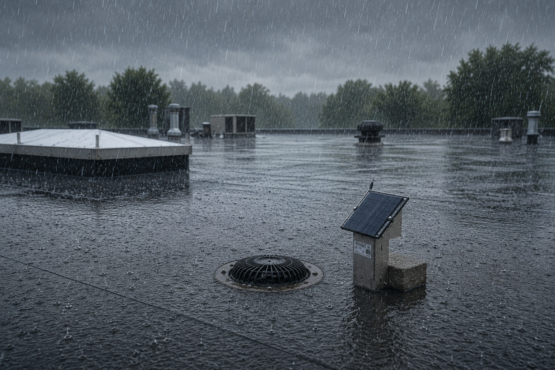
When we think about loads on a flat roof, winter is usually the first thing that comes to mind: accumulated snow, snow removal and decisions made under the pressure of changing weather conditions.
However, flat roofs are exposed to loads all year round. During summer, one of the key risks is heavy rainfall and the resulting accumulation of water on the roof.
Large volumes of rainwater can build up within just a few minutes and drain away just as quickly once the rain stops. This means that a temporary additional load may occur during a downpour even if, after the rainfall has ended, there are no obvious signs that water had accumulated on the roof.
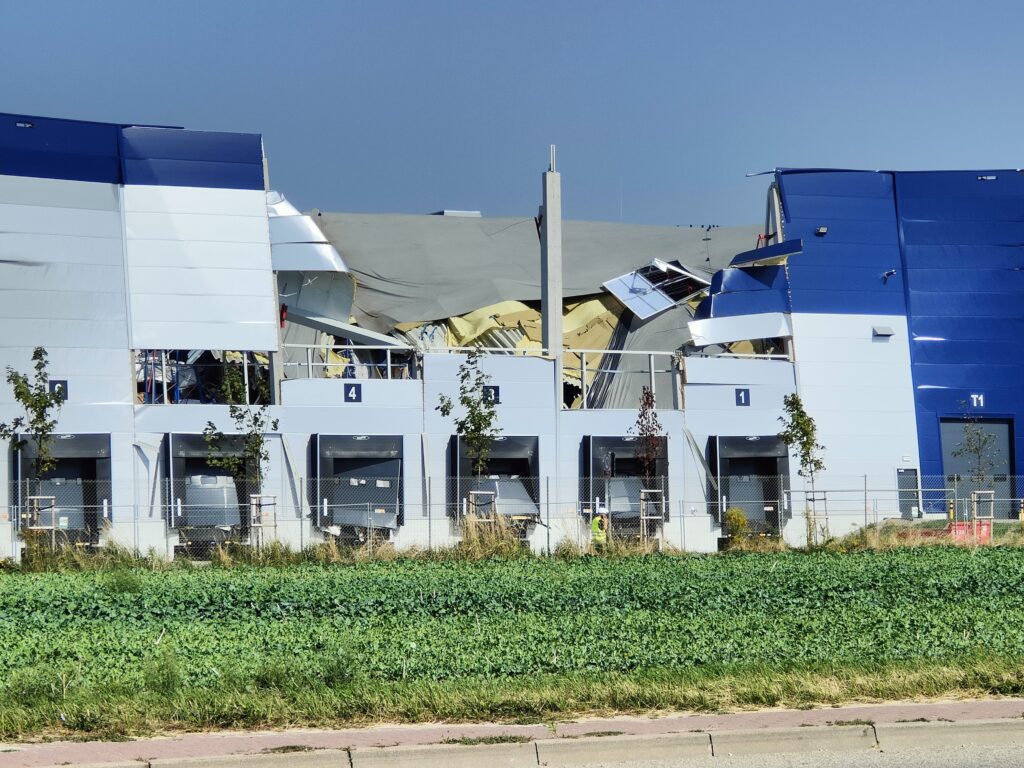
The consequences can be serious – from leaks and local damage to the roof covering to additional loads on structural elements that may affect the safety of the building.
So how can you check whether flat roof drainage is working properly at the very moment when accessing the roof may be unsafe? One way is to monitor water levels around roof drains.
Why Can Water Accumulation on a Flat Roof Be Dangerous?
A roof structure is affected by many factors, including snow, wind, temperature changes, technical installations mounted on or beneath the roof structure, and rainwater.
Heavy rainfall differs from many other types of loading because water levels can rise suddenly, remain elevated for only a few or several minutes and then fall again.
A facility manager who inspects the roof only after the rainfall has ended may therefore be unaware that significantly more water had accumulated during the most intense phase of the storm.
Excessive water accumulation or ponding on a flat roof can lead to:
- leaks and moisture penetration into roof layers,
- local damage to the roof covering,
- accelerated deterioration of the waterproofing,
- additional loads on structural elements,
- reduced building safety.
A small amount of water on the roof does not automatically mean that the structure is at risk. The depth and surface area of the accumulated water, how long it remains on the roof, its location and the parameters of the specific roof all need to be taken into account.
How Much Does Water on a Flat Roof Weigh?
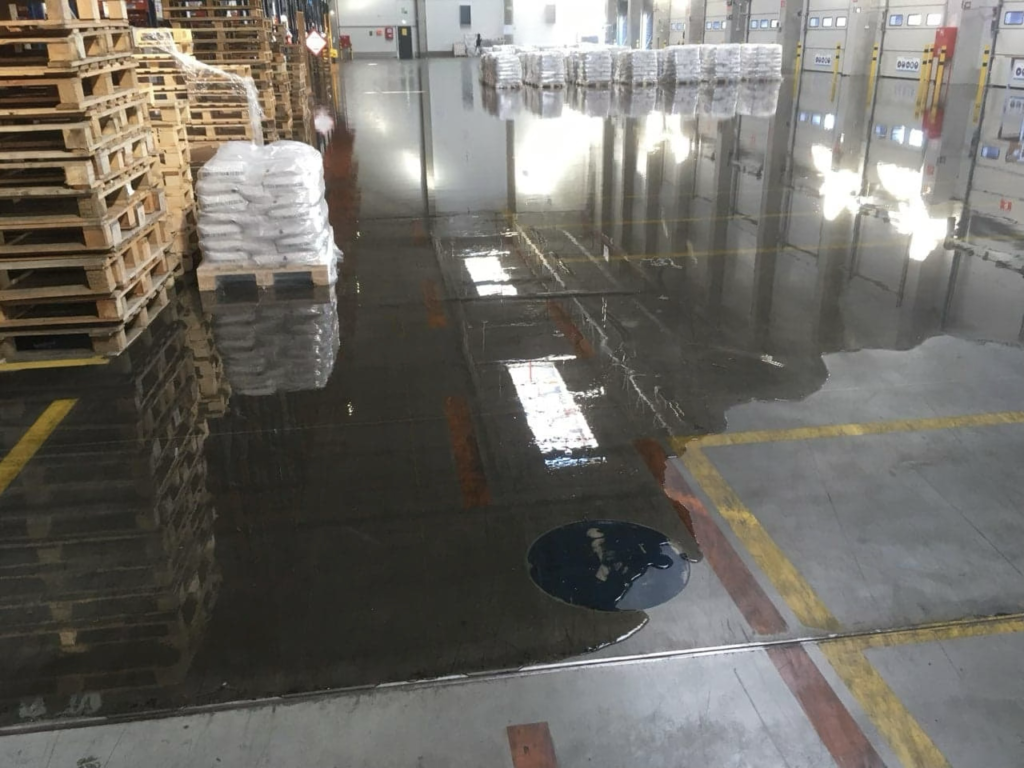
A 1 cm layer of water adds approximately 10 kg of load per square metre of roof area.
This means that:
- 5 cm of water adds approximately 50 kg/m²,
- 10 cm of water adds approximately 100 kg/m²,
- 15 cm of water adds approximately 150 kg/m².
If water is ponding over only a small area, these values may not appear particularly high. On large commercial and industrial flat roofs, however, water can accumulate across a much larger area, adding significant load to a specific section of the roof structure.kreślonej strefy konstrukcji.
Water Load vs Snow Load on a Flat Roof
Roof structures are designed to account for different types of loading, including snow loads. The value used in structural calculations depends on factors such as the building location, roof geometry and the snow load requirements defined by the standards applicable in a given country.
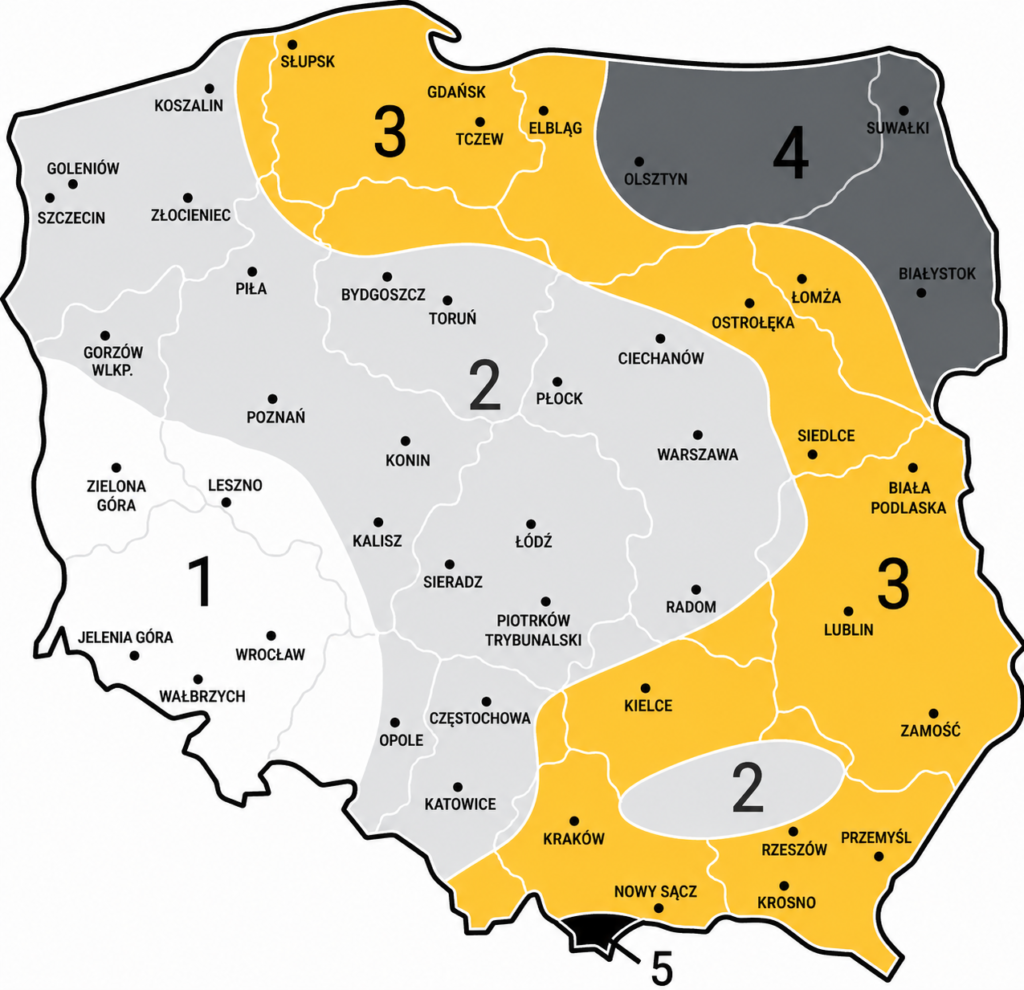
For example, in Poland, the country is divided into snow load zones. Under standard assumptions for a simple flat roof, the snow load may range approximately from 56 kg/m² in Snow Zone I to at least 160 kg/m² in Snow Zone V.
These values correspond to approximately 5.6 to 16 cm of water.
This comparison shows why even a few centimetres of water accumulation on a flat roof can be significant.
The values above refer specifically to Polish snow load zones and should not be treated as universal. In other countries, snow loads are determined according to the relevant national or regional standards, climatic data and snow load maps. When assessing a particular building, the applicable local requirements and the building’s structural documentation should always be taken into account.
It is also important to remember that a roof structure is subjected to multiple loads at the same time. The actual capacity of a specific building should therefore always be assessed on the basis of its technical documentation and structural calculations.
What Causes Water Accumulation and Ponding on a Flat Roof?
Ponding water and temporary water build-up on a flat roof are rarely caused by a single issue. In many cases, the problem results from a combination of heavy rainfall and limited roof drainage capacity.
Blocked or Clogged Roof Drains
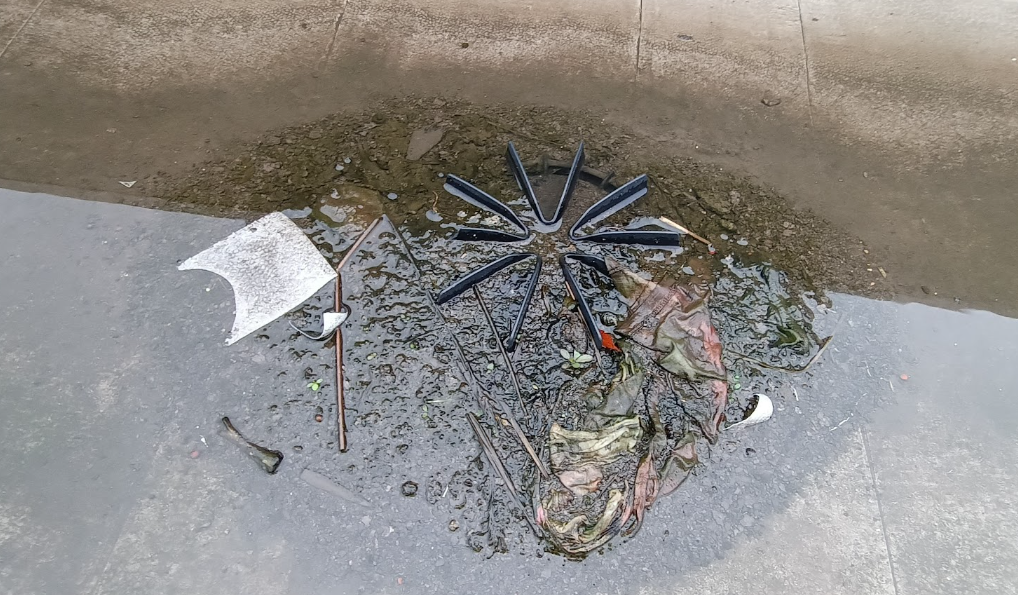
JBlocked roof drains are one of the most common causes of water accumulation.
Water flow can be restricted by:
- leaves and other organic debris,
- sand and gravel,
- pieces of roofing membrane,
- packaging and debris left after maintenance work,
- loose components of technical installations.
During light rainfall, a partially blocked roof drain may not cause any obvious problems. During heavy rainfall, however, it may become clear that the drain cannot remove water quickly enough, causing the water level around it to rise.
Insufficient Flat Roof Drainage Capacity
A flat roof drainage system can be unobstructed and still be unable to handle the amount of incoming rainwater. This may be particularly relevant in buildings designed according to different assumptions regarding rainfall intensity.
If water reaches the roof faster than the roof drains and drainage pipes can remove it, the roof begins to retain water temporarily and in an uncontrolled way.
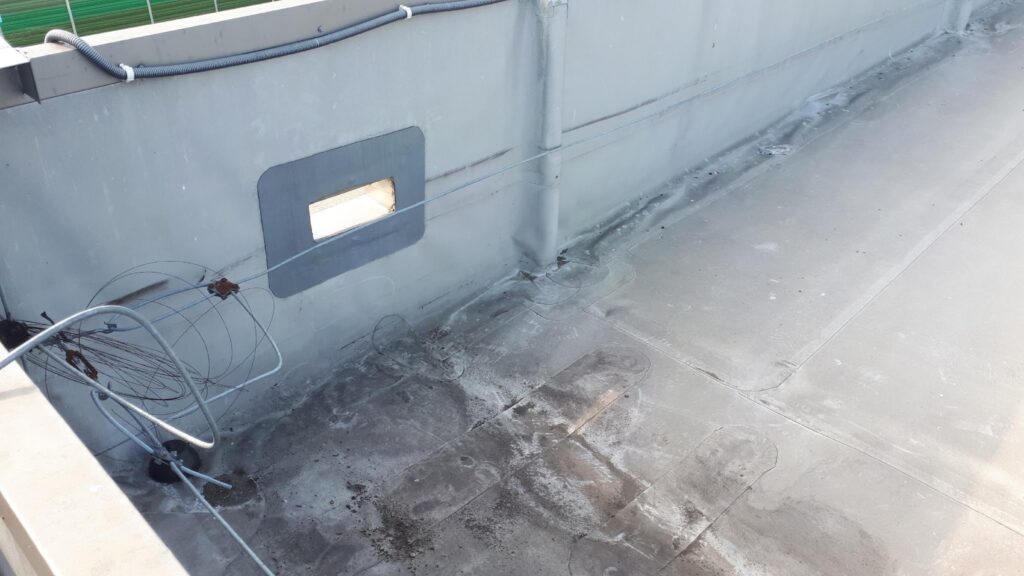
Emergency Overflows Not Working Properly
Emergency overflows are intended to remove excess water when the primary roof drainage system is unable to handle it.
They may fail to perform this function if they are:
- positioned too high,
- blocked,
- too small,
- incorrectly designed or installed.
As a result, the water level on the flat roof may continue to rise even though the building is equipped with an additional drainage safety system.
Drainage Problems Beyond the Roof Surface
Poor roof drainage is not always caused by a problem directly at the roof drain.
Water accumulation can also result from problems further along the rainwater drainage system, for example when:
- rainwater tanks are full,
- the stormwater drainage system cannot accept additional water,
- drainage pipes are blocked,
- the stormwater retention system is not operating as intended.
The effects may become visible on the roof even if the roof drains themselves remain clear.
Roof Geometry and Technical Condition
The effectiveness of flat roof drainage can also be affected by:
- roof slopes,
- the location of roof drains,
- local depressions in the roof surface,
- deformation of the structure or roof layers,
- the arrangement of technical installations,
- obstacles along the water drainage path.
These factors can cause water to remain in specific areas of the roof for longer than originally anticipated during the design stage.
Heavy Rainfall and Climate Change
As the climate changes, short-duration, high-intensity weather events are becoming increasingly important for building management. For facility managers, this means having to consider situations in which a large volume of rainwater reaches the roof within a short period of time.
Regular technical inspections remain an essential part of safe roof operation. However, an inspection carried out after a storm does not always show what was happening on the roof during the most intense phase of the rainfall.
Why Can a Roof Inspection Miss Temporary Water Accumulation?
A roof inspection carried out after heavy rainfall shows the condition of the roof at the time it is accessed.
It does not always reveal:
- how high the water level had risen during the rainfall,
- how long the water build-up lasted,
- which roof drain was removing water more slowly,
- whether the same situation had occurred during previous rainfall events,
- whether the problem affected one location or a larger section of the roof.
Sometimes accumulated water drains away only a few minutes after the rain stops. The roof may therefore appear to be functioning correctly even though a significantly larger amount of water had been present shortly beforehand.
This is why periodic roof inspections and continuous water level monitoring serve different purposes. An inspection helps assess the technical condition of the roof. Monitoring provides data from the period when water accumulation is actually occurring.
How Can You Monitor Flat Roof Drainage During Heavy Rain?
During heavy rainfall, accessing a flat roof can be dangerous and may not be permitted. At the same time, this is precisely when information about drainage performance is most valuable.
Is water draining properly? Is the water level rising? Is water beginning to accumulate around a specific roof drain?
Remote roof water monitoring can provide this information using sensors installed near roof drains. By continuously measuring water levels, the system makes it possible to see what is happening during rainfall without sending employees onto the roof.
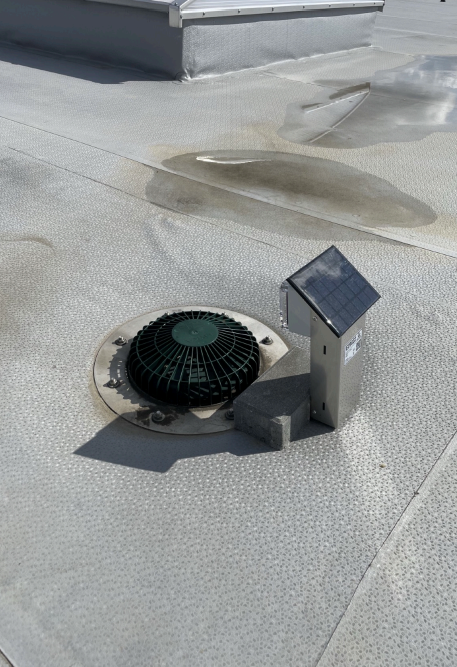
This is how SENSE DSW works – a system designed to detect excessive water accumulation and monitor water levels on flat roofs.
How Does SENSE DSW Monitor Water Levels at Roof Drains?
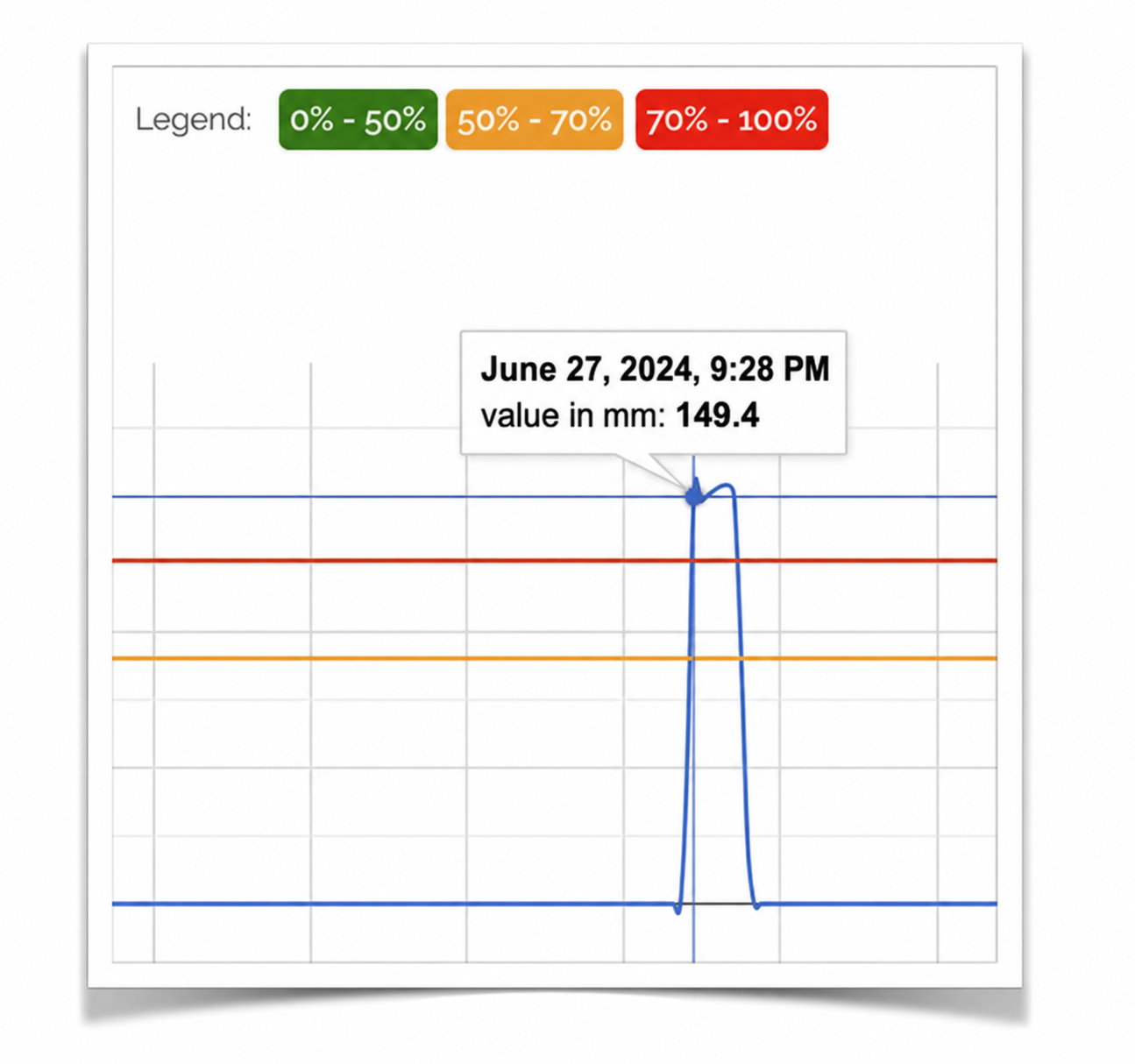
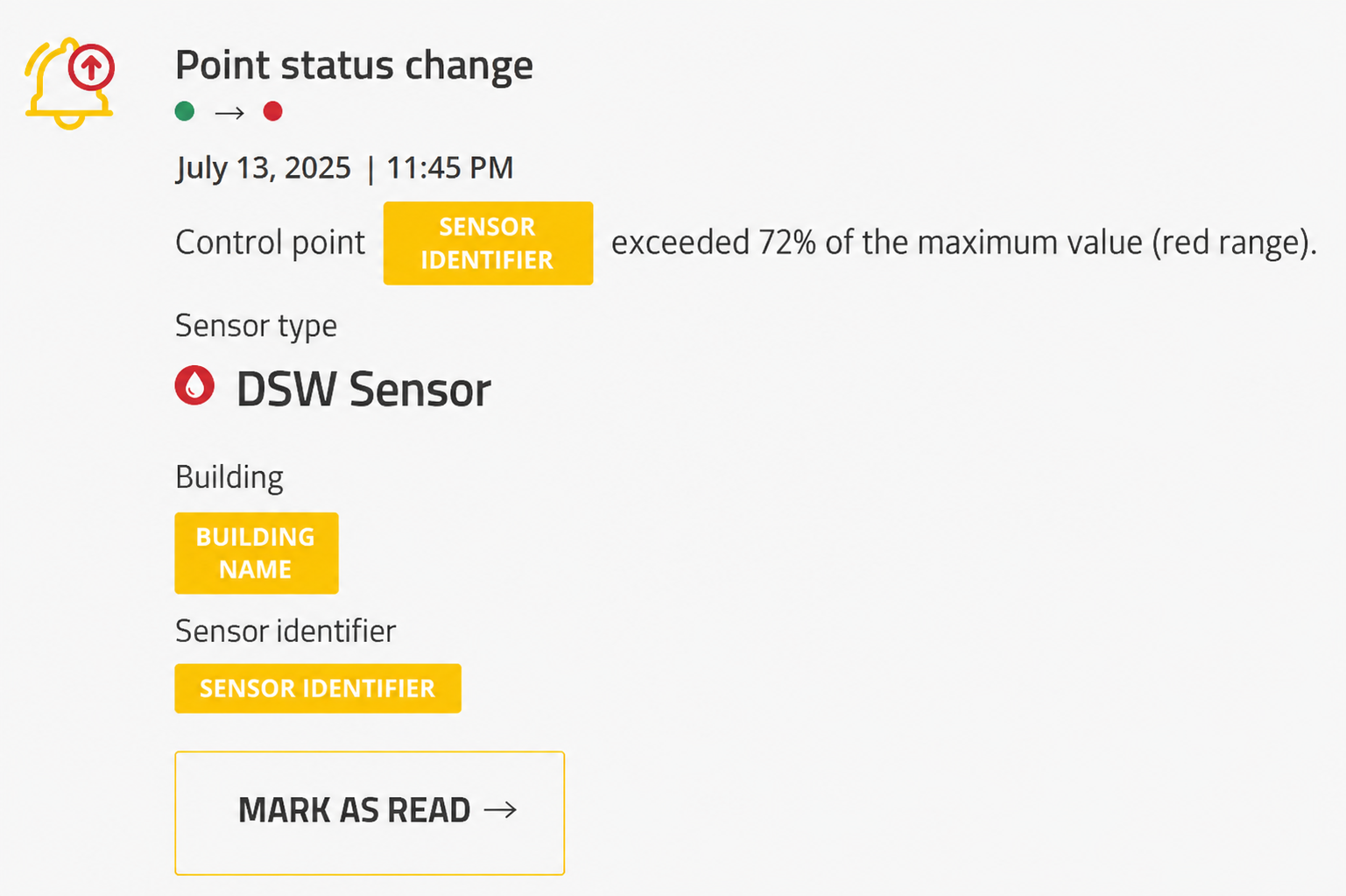
SENSE DSW uses non-invasive sensors installed near roof drains. The sensors measure the water level every 2 minutes with an accuracy of 1 cm and send the measurements to the SENSE Smart Roofs app.
During rainfall, a facility manager can check:
- whether the water level around roof drains is rising,
- which roof drain is affected,
- how long the water build-up persists,
- whether the water has started to drain away,
- whether similar events recur during subsequent rainfall.
When predefined levels are exceeded, the user receives a notification.
SENSE DSW does not replace a structural assessment and does not directly measure the load across the entire roof. Instead, it provides information about water levels at monitored points, helping assess flat roof drainage performance and identify potential risks more quickly.
What Should You Do After Receiving a Water Build-Up Alert?
A water level alert does not mean that employees should be sent onto the roof during heavy rainfall to clear a blocked drain. In these conditions, the safety of people remains the priority.
Monitoring data can help determine the location and scale of the event so that further action can be taken in accordance with the safety procedures in place at the building.
Depending on the situation, this may include:
- notifying the technical team,
- continuing to monitor changes in the water level,
- securing the area below the affected section of the roof,
- restricting access to a specific part of the building,
- activating emergency procedures if the level of risk requires it.
The response should take into account the parameters of the roof structure, the building’s safety procedures and the assessment of the people responsible for its operation.
How Can Roof Water Monitoring Data Be Used After Heavy Rain?
Once the rainfall has ended and it has been confirmed that accessing the roof is safe, the technical team can be directed to the specific location identified by the monitoring system.
Water level data can help determine:
- which roof drains were removing water more slowly,
- where water accumulation or ponding occurred,
- how long the elevated water level persisted,
- whether the drainage problem occurs regularly,
- which areas require a more detailed inspection.
Based on this information, a specific roof drain can be cleared, its cleaning frequency can be increased, other parts of the rainwater drainage system can be inspected or improvements to the flat roof drainage system can be planned.
What Are the Benefits of Monitoring Roof Drains and Water Levels?
From a facility manager’s perspective, one of the main benefits of water level monitoring is access to data from the exact time when the drainage problem occurs.
Monitoring can help:
- detect excessive water accumulation more quickly,
- reduce the number of unnecessary roof inspections,
- direct the technical team to a specific location,
- identify drainage problems that recur during heavy rainfall,
- plan roof drain cleaning and maintenance more effectively,
- document weather-related events,
- make decisions based on measurements rather than assumptions.
Historical measurement data can also provide additional documentation of how the building is operated and what actions have been taken by the owner or facility manager.
SENSE DSW does not replace technical roof inspections or regular checks of roof drain condition and performance. Instead, it complements them with information that a standard inspection cannot provide: water level data collected during heavy rainfall.
Roof Drainage Audit or Continuous Water Level Monitoring?
A flat roof drainage audit and continuous water level monitoring answer different questions.
A drainage audit can be used to assess, among other things:
- drainage system documentation,
- the location and capacity of roof drains,
- emergency overflow performance,
- the risk of excessive water accumulation.
Continuous monitoring shows how the roof drainage system performs under real conditions – during actual rainfall events and at individual points on the roof.
In practice, the two approaches can complement each other. A roof drainage audit helps assess the system and identify areas that require attention. Water level monitoring makes it possible to observe drainage performance continuously and detect events that may not be visible during a scheduled roof inspection.
Flat Roof Drainage Should Be Monitored in Summer Too
Winter has long been a period of increased attention for flat roofs. Summer increasingly requires the same level of awareness – particularly in buildings with large roof areas, older drainage systems and roofs with extensive technical installations.
Heavy rainfall leaves little time to respond. It is therefore important to know whether the flat roof drainage system is actually removing water effectively and what happens on the roof during the most intense phase of a storm.
Regular roof inspections, roof drain cleaning, drainage audits and water level monitoring together form a set of measures that can help prepare a building more effectively for weather-related risks and the effects of a changing climate.
Frequently Asked Questions About Water on Flat Roofs
Can Ponding Water Damage a Flat Roof?
Yes. Long-term water ponding can contribute to leaks, moisture penetration into roof layers and deterioration of the roof covering. Larger amounts of accumulated water also add load to the roof structure. The depth, surface area, location and duration of water accumulation all need to be considered.
How Much Does 1 cm of Water on a Flat Roof Weigh?
A 1 cm layer of water weighs approximately 10 kg per square metre. This means that a 10 cm layer of accumulated water adds approximately 100 kg of additional load per square metre of roof area.
Why Does Water Accumulate on a Flat Roof?
Common causes include blocked or clogged roof drains, insufficient drainage capacity, emergency overflows that are not functioning properly, local depressions in the roof surface and problems further along the stormwater drainage system.
What Causes Ponding Water Around Roof Drains?
Water can accumulate around roof drains if they are blocked or cannot remove rainwater quickly enough. The problem may also result from insufficient drainage capacity, roof geometry, local depressions or issues further along the drainage system.
How Can You Check Roof Drains During Heavy Rain?
Employees should not be sent onto the roof during a downpour. Roof drain performance can be monitored indirectly using sensors that measure water levels nearby. A rising water level or one that remains elevated may indicate restricted drainage.
Does Water Level Monitoring Replace Roof Inspections?
No. Water level monitoring provides ongoing data about water accumulation but does not replace an assessment of the roof covering, drains, overflows, installations or structure. It complements regular inspections and maintenance.
What Should You Do If Water Is Ponding on a Flat Roof?
During heavy rainfall, the roof should not be accessed if conditions are unsafe. The development of the situation should be monitored and the building’s safety procedures should be followed. Once the rain has stopped and safe access has been confirmed, the affected roof drain and surrounding area should be inspected.
Monitor What Happens on Your Flat Roof During Heavy Rain
You do not have to wait until the rainfall has ended to find out whether water is draining properly.
SENSE DSW allows you to remotely monitor water levels around roof drains, receive notifications about potentially hazardous events and analyse historical measurement data in the SENSE Smart Roofs app.


